
Constipation: What Helps, Which Laxatives to Try, and When It's More Than Diet
Constipation is common and usually fixable with fiber, fluids and the right laxative. Here's what helps, and the warning signs that mean it's more than diet.
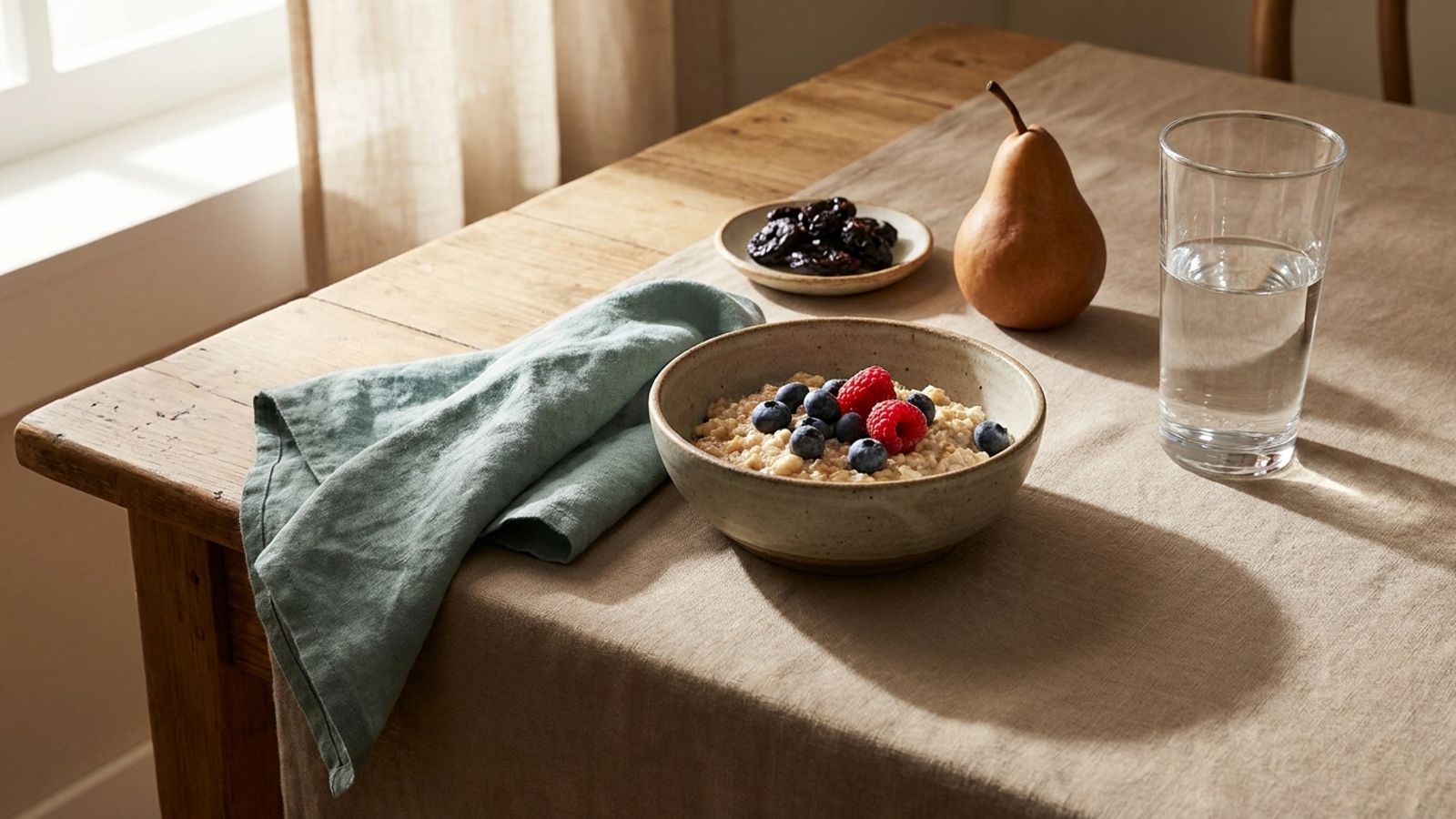
Constipation means having fewer than three bowel movements a week, or stools that are hard, dry and difficult to pass. It's very common, and usually comes from too little fiber or fluid, not enough activity, travel, a change in routine or a medicine. Most cases improve with more fiber, water and movement, and an over-the-counter laxative if needed. Constipation with severe belly pain, vomiting, a swollen belly, or blood in the stool needs to be seen.
Signs of constipation
- Fewer than three bowel movements a week
- Hard, dry or lumpy stools
- Straining or pain when passing stool
- Feeling like you haven't fully emptied
- Bloating and crampy belly discomfort
Common causes
- Not enough fiber or fluids
- Not enough activity, or long days sitting
- Travel and changes in routine, including flying and altitude
- Ignoring the urge to go
- Medicines: opioid pain medicines, iron, some antacids, antidepressants and allergy medicines
- Pregnancy
- Conditions such as irritable bowel syndrome, an underactive thyroid or diabetes
What helps
- Fiber: aim for 25 to 35 grams a day from fruit, vegetables, beans, whole grains and prunes, and add it gradually to avoid gas
- Fluids: drink plenty of water, especially in Denver's dry climate
- Movement: a daily walk helps the bowel move
- Routine: try going at the same time each day, often after breakfast, and don't hold it in
- Position: a small footstool under your feet on the toilet can make it easier
Over-the-counter laxatives
- Fiber supplements (psyllium, methylcellulose): gentle and good for long-term use; take with plenty of water
- Stool softeners (docusate): help mild cases
- Osmotic laxatives (polyethylene glycol, milk of magnesia): draw water into the bowel, usually work in one to three days
- Stimulant laxatives (senna, bisacodyl): work within hours, best for short-term use
- Suppositories or enemas: for faster relief when stool is stuck low in the bowel
Check with a clinician before giving laxatives to children, or if you're pregnant, have kidney disease or take other medicines.
Constipation in kids
Constipation is common in children, especially during potty training and when starting school. Signs include hard stools, belly pain, holding stool in, and leaking or soiling. More fluids, fruit and vegetables, and regular toilet time after meals help. Talk to a clinician before using a laxative in a child.
When to get seen
Come in if constipation lasts more than a week despite home treatment, comes with belly pain, keeps coming back, or follows a new medicine, or if a child is constipated and in pain. A clinician can check for an impaction (hard stool stuck in the rectum), recommend the right laxative plan, and look for other causes. Straining can also cause painful hemorrhoids or a fissure. Our post on lower belly pain covers other causes of pain.
At an AfterOurs clinic, a standard self-pay visit is $175, and a self-pay in-clinic visit never costs more than $330. We contract with all major commercial and government plans, including Colorado Medicaid and Medicare. See our constipation page and the cost and insurance page.
Go to the ER or call 911 if you have severe belly pain, a swollen or hard belly, vomiting (especially if it looks like stool), can't pass gas, have a lot of blood in your stool or black, tarry stool, or are constipated with a fever.
Where to find us
Four clinics across metro Denver, all ages welcome, se habla español:
- Hampden (Southeast Denver): 8 AM–11 PM daily
- Littleton: 8 AM–11 PM daily
- Thornton: 8 AM–11 PM daily
- Highlands: Mon–Fri 5–11 PM, Sat–Sun 8 AM–11 PM
Walk in, or book online.
Medically reviewed by Peter Martinuzzi, MD
This article is general health information, not medical advice for your situation. If you are worried, come in or book a telehealth visit — and if it is an emergency, call 911.