
COVID Test: Rapid vs. PCR, When to Test, and What a Negative Means
Rapid tests are fast but can miss early infections; PCR tests are more sensitive but slower. Here's which to use, when to test, and when to retest.
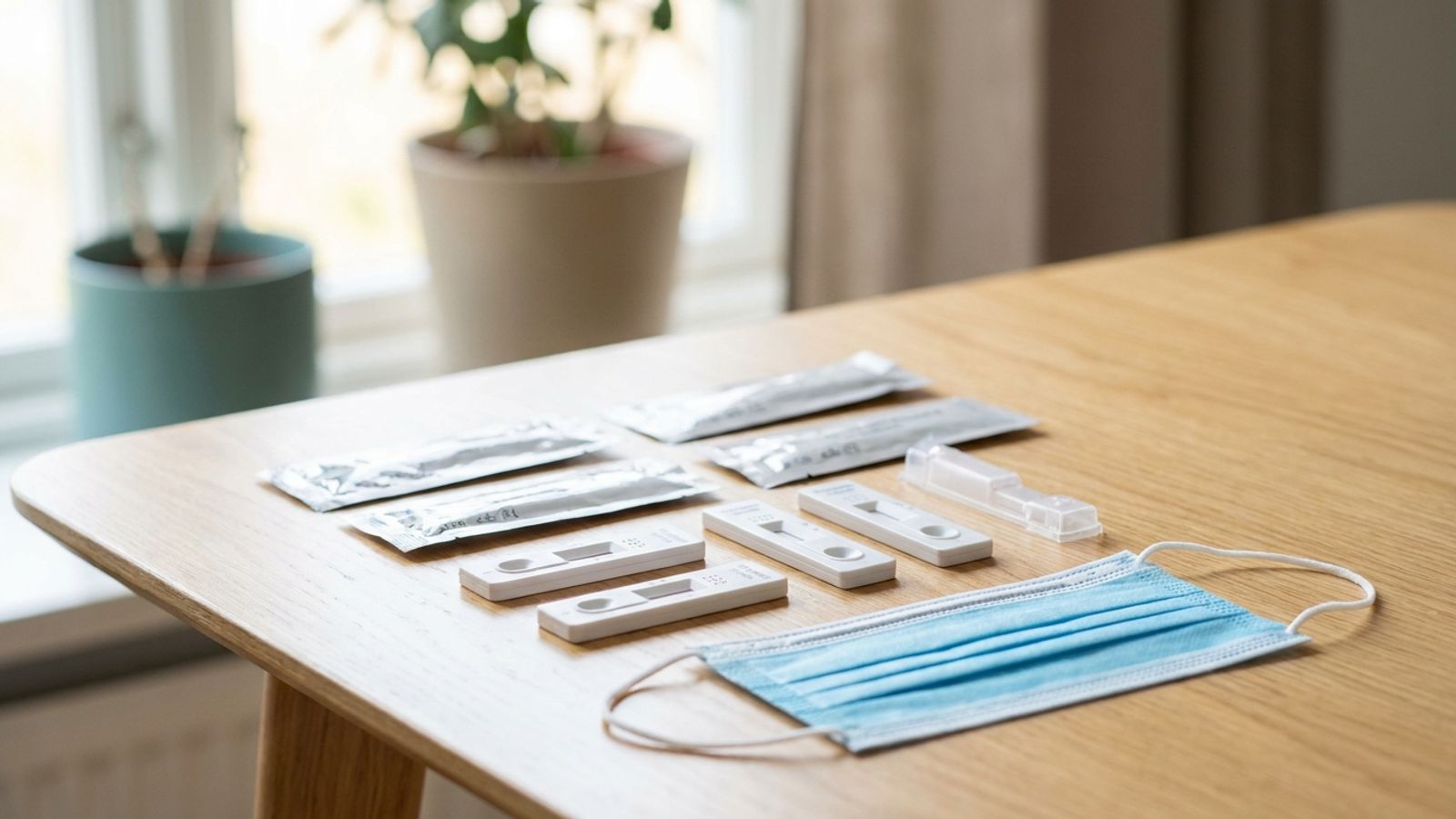
There are two main kinds of COVID test. A rapid antigen test gives a result in about 15 minutes and is very reliable when it's positive, but it can miss an infection in the first day or two of symptoms. A molecular test, such as PCR, is more sensitive and better at catching early infections, but may take longer. If a rapid test is negative and you still have symptoms, test again 48 hours later, or get a molecular test.
Rapid antigen tests
- Detect proteins from the virus, from a nose swab
- Results in about 15 minutes, at home or in a clinic
- A positive result is very likely right
- A negative result early in an illness can be wrong, because there may not be enough virus yet
PCR and other molecular tests
- Detect the virus's genetic material
- More sensitive, so they catch infections earlier and with less virus
- Can stay positive for weeks after you've recovered, so they're less useful for deciding if you're still contagious
- Some molecular tests give results within the hour; lab PCR can take a day or more
When to test
- With symptoms: test right away. If it's negative, test again in 48 hours.
- After an exposure with no symptoms: wait at least five days, then test. If negative, retest 48 hours later, and again 48 hours after that.
- Before visiting someone at high risk: test as close to the visit as you can.
Is it COVID, flu or RSV?
They can feel alike. At AfterOurs, a clinician can test for COVID, flu and RSV during the same visit. Our post on flu, COVID or RSV explains what each rapid test can tell you, and why it matters: some treatments for COVID and flu work best when started within the first few days of symptoms.
Who should get seen
Anyone at higher risk of getting very sick should talk to a clinician early: adults over 65, people who are pregnant, and people with lung disease, heart disease, diabetes, obesity or a weakened immune system. A clinician can decide whether an antiviral medicine makes sense for you.
At an AfterOurs clinic, a standard self-pay visit is $175, a visit with a rapid test is $250, and a self-pay in-clinic visit never costs more than $330. A telehealth visit is $75. We contract with all major commercial and government plans, including Colorado Medicaid and Medicare. See our rapid testing page and the cost and insurance page.
Call 911 or go to the ER if you have trouble breathing, pain or pressure in the chest that won't go away, new confusion, trouble staying awake, or lips or skin that look pale, gray or blue.
Where to find us
Four clinics across metro Denver, all ages welcome, se habla español:
- Hampden (Southeast Denver): 8 AM–11 PM daily
- Littleton: 8 AM–11 PM daily
- Thornton: 8 AM–11 PM daily
- Highlands: Mon–Fri 5–11 PM, Sat–Sun 8 AM–11 PM
Walk in, or book online.
Medically reviewed by Peter Martinuzzi, MD
This article is general health information, not medical advice for your situation. If you are worried, come in or book a telehealth visit — and if it is an emergency, call 911.