
Will Urgent Care Do Stitches? How to Tell if a Cut Needs Them
Urgent care can close most cuts. How to tell if a cut needs stitches, how soon to get it closed, what to do on the way in, and how long stitches stay in.
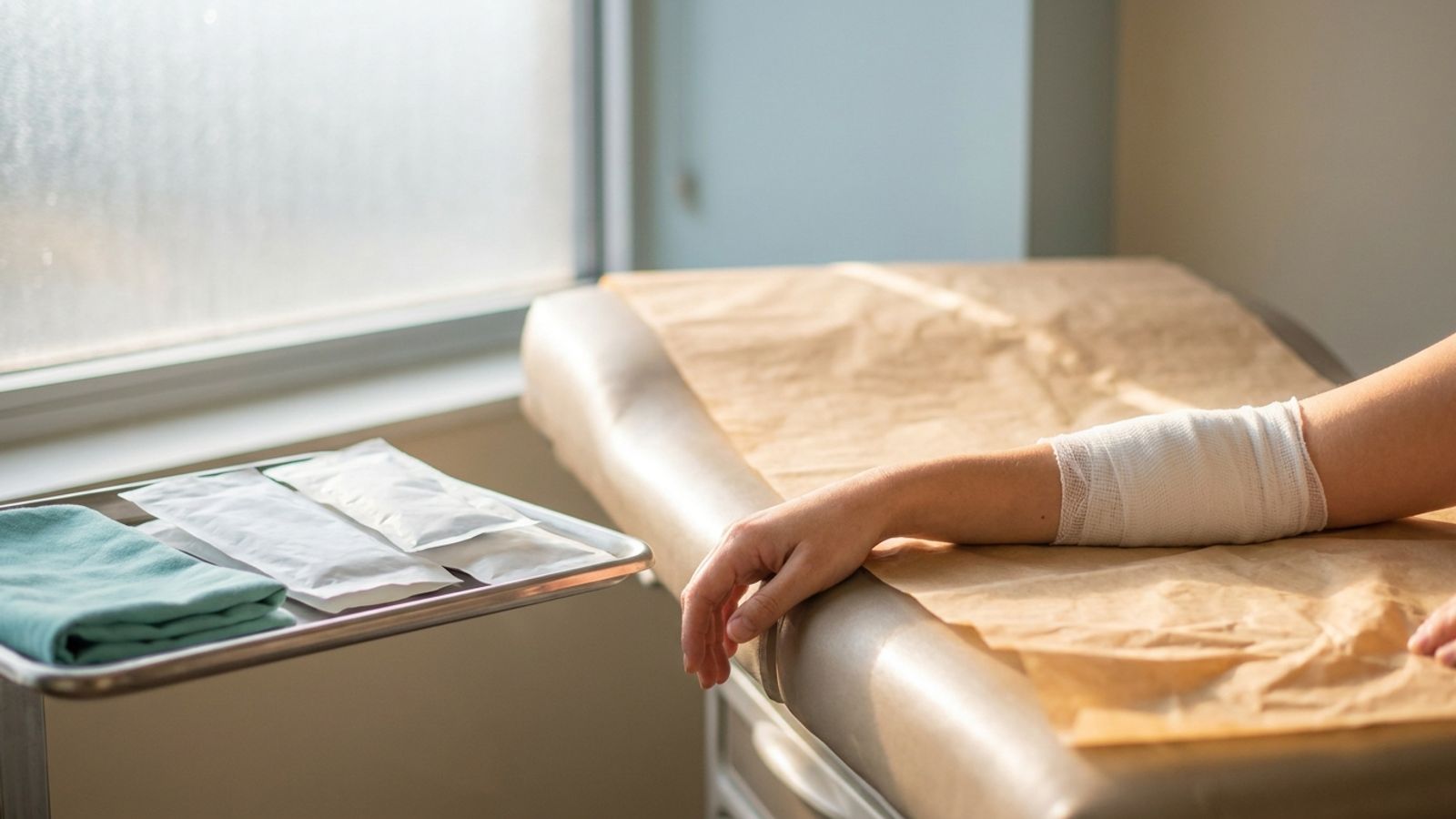
Yes, urgent care does stitches. Most cuts that need closing, including deep cuts on the hands, arms, legs and scalp, can be repaired at an urgent care clinic, and at AfterOurs that includes stitches, staples and skin glue. A cut probably needs stitches if it's gaping open, deeper than about a quarter inch, longer than about half an inch, or still bleeding after 10 minutes of firm pressure. Get it checked soon: wounds are best closed within a few hours.
How do I know if I need stitches?
A cut is more likely to need stitches, staples or glue if:
- The edges gape apart and don't come together on their own, or you can see fat, muscle or other tissue
- It's deep: more than about a quarter inch (6 mm), or it goes all the way through the skin
- It's long: more than about half an inch, especially on a part of the body that moves a lot
- It keeps bleeding after 10 minutes of steady, direct pressure
- It's over a joint, like a knuckle or knee, where movement keeps pulling it open
- It's on the face, lips or eyelid, where careful closure helps it heal with less scarring
- It was caused by a bite, a dirty or rusty object, or something that may have left debris in the wound
Small, shallow cuts with edges that stay together usually heal well with cleaning and a bandage. If you're unsure, it's better to have a clinician look than to wait and find out it's too late to close.
How soon do you need stitches?
The sooner the better. Many cuts are best closed within about 6 to 8 hours, and some, such as cuts on the face, can be closed a bit later. After that, the risk of infection goes up, and a clinician may decide to leave the wound open to heal on its own instead. That's one reason an evening cut shouldn't wait until tomorrow. All four AfterOurs clinics are open until 11 PM.
What to do before you come in
- Press firmly on the cut with a clean cloth or gauze for 10 minutes without lifting to check. Raise it above the level of the heart if you can.
- Rinse it with clean running water once bleeding slows. Skip hydrogen peroxide and alcohol, which can damage tissue.
- Cover it with a clean bandage or cloth.
- Don't try to close a deep cut yourself with tape or super glue from the drawer.
- Note when your last tetanus shot was, if you know.
What happens at the visit?
A clinician looks at the cut, checks feeling, movement and blood flow around it, and decides how best to close it. At AfterOurs, laceration repair usually goes like this: the area is cleaned and numbed, the wound is closed with stitches, staples or skin glue, and you get wound-care instructions. A tetanus update is given if you need one.
Not every cut needs stitches. Skin glue works well for some small, clean cuts with straight edges, and staples are often used on the scalp. The clinician will pick the method that suits the wound. Our cuts and lacerations page has more on what we treat.
Call 911 or go to the ER if bleeding is spurting or won't slow with firm pressure, the cut is very large or deep, a body part is partly or fully cut off, there's numbness, weakness or trouble moving fingers or toes beyond the cut, there's an object stuck in the wound (leave it in place), the cut is on the eyeball, or it's a deep wound to the chest, abdomen, neck or head.
How long do stitches stay in?
It depends on where they are. As a rough guide, stitches on the face often come out after about 3 to 5 days, on the scalp, arms and trunk after about 7 to 10 days, and on the legs, feet, hands or over a joint after about 10 to 14 days. Your clinician will tell you when to come back. Some stitches dissolve on their own and don't need removing.
Watch for signs of infection while the wound heals: spreading redness, warmth, swelling, pus, red streaks, increasing pain, or a fever. If you notice any of these, get the wound checked.
What does it cost to get stitches?
At AfterOurs, a visit for a procedure such as stitches is $330 self-pay, the top of our three visit tiers, and that's the most a self-pay visit costs and includes removal. The cost and insurance page explains the tiers. If we placed your stitches and billed your insurance, removing them is also billed to your insurance. If they were placed somewhere else, suture or staple removal is $50 self-pay.
We contract with all major commercial and government plans, including Colorado Medicaid and Medicare. We can't guarantee a commercial plan has us in network, and if you're out of network or your benefits are denied, we bill you at our self-pay rates.
Where to find us
Four clinics across metro Denver, all ages welcome, se habla español:
- Hampden (Southeast Denver): 8 AM–11 PM daily
- Littleton: 8 AM–11 PM daily
- Thornton: 8 AM–11 PM daily
- Highlands: Mon–Fri 5–11 PM, Sat–Sun 8 AM–11 PM
Walk in, or book online.
Medically reviewed by Peter Martinuzzi, MD
This article is general health information, not medical advice for your situation. If you are worried, come in or book a telehealth visit — and if it is an emergency, call 911.