
Ear Wax Buildup: Getting Plugged Ears Irrigated at Urgent Care
Plugged or clogged ears are often ear wax. What causes buildup, what's safe to try at home, and how ear irrigation works at urgent care.
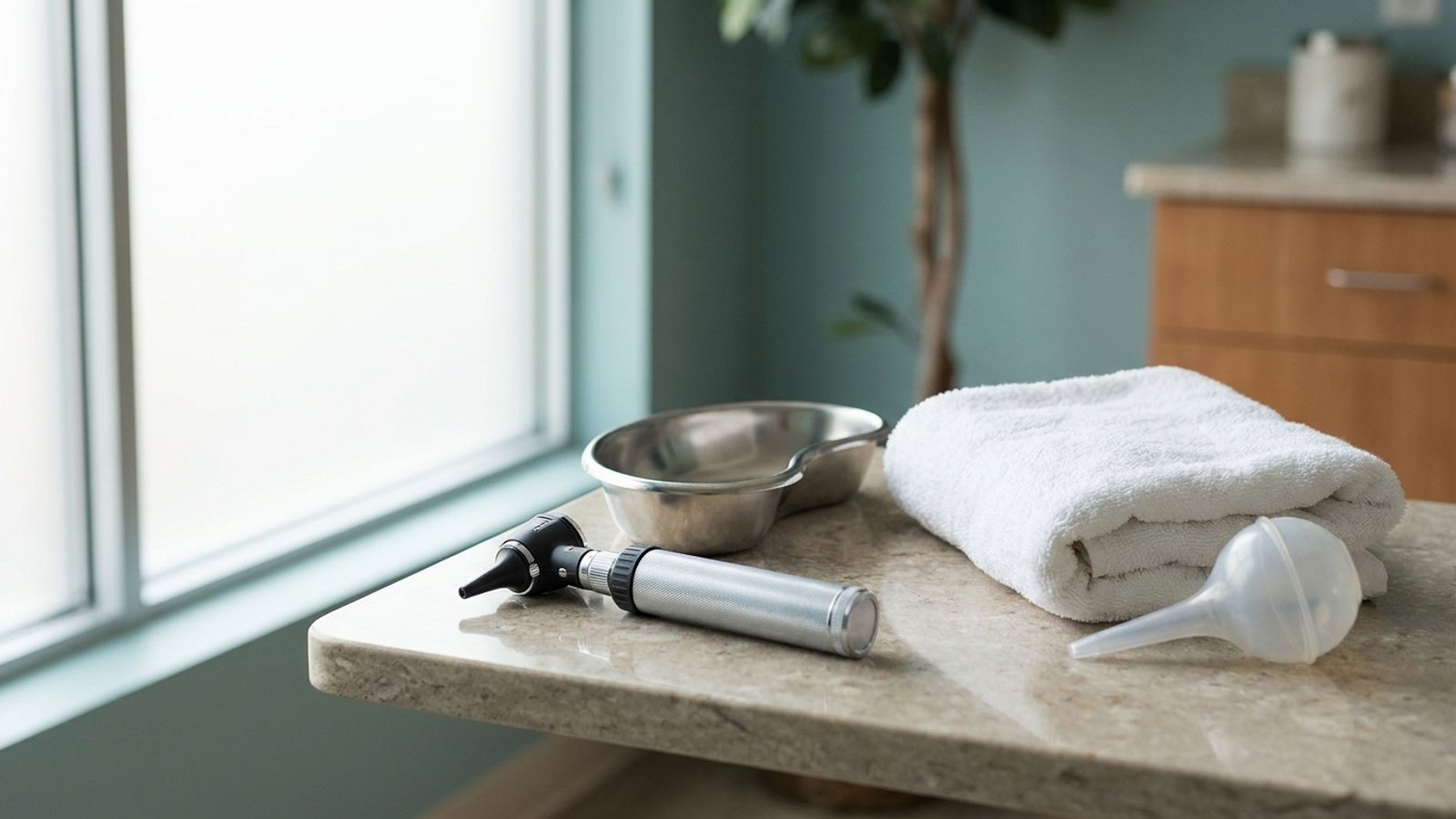
If your ear feels plugged, muffled or full and you don't have a cold, ear wax buildup is one of the most common reasons. Wax that's packed against the eardrum can usually be removed at urgent care in a single visit: a clinician looks in the ear to confirm it's wax, and then it's washed out with warm water (ear irrigation) or lifted out with small instruments.
Why do ears get plugged with wax?
Ear wax is normal. It protects the ear canal and usually works its way out on its own as you talk and chew. Buildup happens when that process gets interrupted. Common reasons:
- Cotton swabs, which push wax deeper and pack it against the eardrum
- Earbuds, hearing aids and earplugs worn for hours a day
- Narrow or curvy ear canals, or simply making more wax than average
- Age: wax tends to get drier and harder in older adults
Is it wax, fluid or an ear infection?
A clogged ear can come from a few different places, and they feel surprisingly similar from the inside. Wax buildup tends to cause muffled hearing, fullness, ringing or itching, and sometimes it comes on suddenly after a shower or swim, when water makes the wax swell. Fluid behind the eardrum often follows a cold, allergies or a flight, and may pop or crackle when you swallow. An ear infection is more likely to bring real pain, fever or drainage.
You can't see your own eardrum, which is why a quick look with a lighted scope is worth it. It tells the clinician whether there's wax to remove, fluid to wait out, or an ear infection that needs treatment, and whether more than one is going on.
What's safe to try at home?
If your ear is plugged but not painful, and you've never had an eardrum perforation, ear tubes or ear surgery, over-the-counter ear wax softening drops are a reasonable first step. Follow the directions on the package. Softening sometimes clears the wax on its own over a few days, and it makes irrigation easier if you do come in.
What to skip:
- Cotton swabs, bobby pins, keys or anything else pushed into the canal
- Ear candles, which don't remove wax and can burn the ear or face
- Home irrigation kits or water jets if your ear hurts, is draining, or you've had eardrum problems before
If a few days of softening drops haven't helped, or your hearing is noticeably reduced, it's time to have it looked at.
Call 911 or go to the ER if… you suddenly lose hearing in one ear with no clear cause; you have sudden severe dizziness with vomiting or trouble walking; one side of your face is weak or drooping; you have a stiff neck, high fever or severe headache with ear pain; the area behind your ear is swollen, red and painful; or clear fluid or blood is coming from the ear after a head injury.
How does ear irrigation work at urgent care?
At AfterOurs, ear wax removal is part of an urgent care visit:
- A clinician examines the ear to confirm the blockage is wax and check for signs of infection or eardrum problems. Let them know about any past perforation, ear tubes or ear surgery.
- If removal makes sense, a medical assistant gently flushes the canal with warm water, or lifts the wax out with small instruments, depending on the ear and the wax.
- The ear is checked again afterward. If something else turns up, such as an infection in the canal, the clinician can discuss treatment during the same visit.
Irrigation usually feels like warm water and pressure. It can be briefly uncomfortable, and some people feel a little dizzy for a moment. Very hard wax may not all come out in one session; in that case you may be asked to use softening drops for a few days and come back.
Can I prevent it from coming back?
Some people simply make more wax and get plugged ears every so often. Leaving swabs out of the canal helps most. Wipe the outer ear with a washcloth instead. If you wear hearing aids or earbuds all day, clean them regularly and give your ears breaks. If you get buildup again and again, ask your own doctor whether occasional softening drops make sense for you.
What does it cost?
Self-pay in-clinic visits are $175 for a standard visit, $250 with one moderate service like a single ear cleaning, and $330 for a procedure or two moderate services. The tier depends on the care you actually receive. If you're using insurance: we contract with all major commercial and government plans, including Colorado Medicaid and Medicare. We can't guarantee a particular commercial plan has us in network, and if you turn out to be out of network or your benefits are denied, we bill you at the self-pay rates. See our cost and insurance page for details.
Where to find us
Four clinics across metro Denver, all ages welcome, se habla español:
- Hampden (Southeast Denver): 8 AM–11 PM daily
- Littleton: 8 AM–11 PM daily
- Thornton: 8 AM–11 PM daily
- Highlands: Mon–Fri 5–11 PM, Sat–Sun 8 AM–11 PM
Walk in, or book online.
Medically reviewed by Peter Martinuzzi, MD
This article is general health information, not medical advice for your situation. If you are worried, come in or book a telehealth visit — and if it is an emergency, call 911.