
EKG at Urgent Care: What It Shows and When You'd Get One
An EKG is a quick, painless recording of your heart's electrical activity. What it can and can't show, why a clinician might order one, and when to go to the ER.
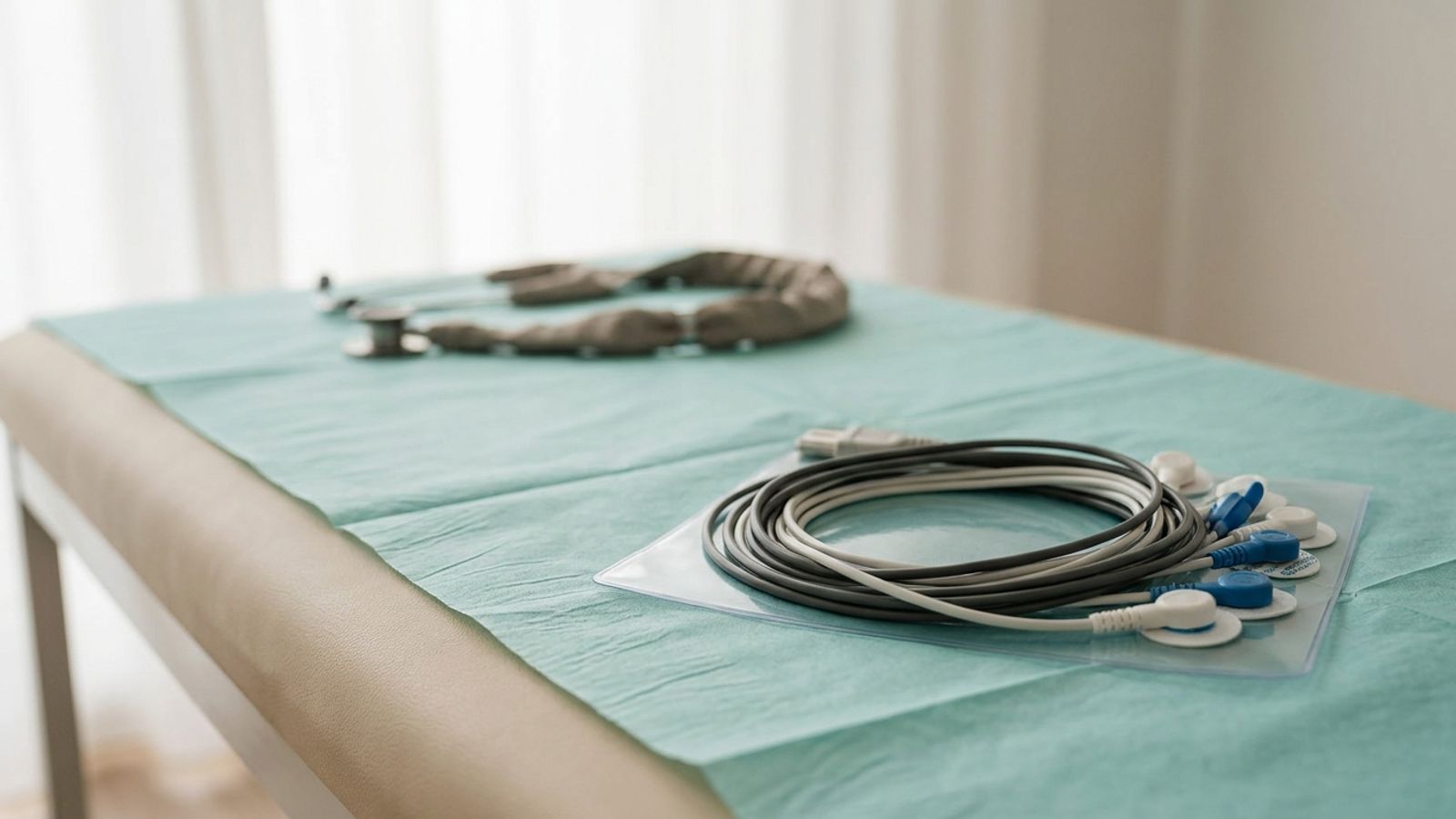
An EKG (also called an ECG, or electrocardiogram) is a quick, painless test that records your heart's electrical activity. At an urgent care, a clinician may order one during your visit to check your heart rhythm if you have symptoms like palpitations or dizziness. One important caveat up front: chest pain that could be a heart attack belongs in the ER, not an urgent care.
Call 911 or go to the ER if… you have chest pain, pressure, squeezing or tightness, especially if it spreads to the arm, jaw, neck or back; shortness of breath; a cold sweat, nausea or lightheadedness with chest discomfort; fainting or nearly fainting; a racing or pounding heartbeat with chest pain, breathlessness or confusion; or signs of a stroke (face drooping, arm weakness, slurred speech). Call 911 rather than driving yourself.
What is an EKG?
Every heartbeat starts with an electrical signal. An EKG picks up those signals through small sticky pads (electrodes) placed on your chest, arms and legs, and draws them as a wave on a screen or paper. EKG and ECG mean the same thing; the K comes from the German spelling.
What does an EKG show?
An EKG gives a snapshot of your heart's rhythm and electrical pattern at that moment. It can help a clinician see:
- How fast your heart is beating, and whether the rhythm is regular
- Irregular rhythms (arrhythmias), such as atrial fibrillation
- Signs that the heart may not be getting enough blood, or may have been strained or damaged
- Changes that can come from some medications or from imbalances in salts like potassium
What an EKG can't tell you
A normal EKG is reassuring, but it isn't a clean bill of health for your heart. It only records the few seconds it's running, so a rhythm problem that comes and goes may not show up. It can't rule out every heart attack, especially early on, and it doesn't show blockages in the arteries directly. That's why a clinician looks at the EKG alongside your symptoms and exam, and may refer you for further testing, such as wearing a heart monitor for a few days or seeing a cardiologist.
When would you get an EKG at urgent care?
At AfterOurs, an EKG is something the clinician orders during a visit when it will help answer a question. Common reasons include:
- Palpitations: a fluttering, pounding or skipping feeling in the chest, without chest pain or other emergency signs
- Dizziness or lightheadedness, where the clinician wants to check the heart as a cause
- Certain medication checks, since some medicines can affect the heart's rhythm
If the EKG or your symptoms suggest something that needs emergency care, the clinician will tell you and help you get there.
What EKG testing is like
You lie still on an exam table while small stickers are placed on your chest and limbs. You may need to open or remove your shirt, and a small patch of chest hair might be shaved so the stickers stick. The recording itself takes a few minutes and doesn't hurt: no needles, and no electricity goes into your body. Wearing a top you can easily remove, and skipping lotion on your chest that day, makes it go faster.
What it costs
Self-pay in-clinic visits are $175 for a standard visit, $250 with one moderate service, and never more than $330. An EKG is one of the moderate services, so a visit with an EKG is typically $250 self-pay, or $330 if you also need a procedure or a second moderate service. We contract with all major commercial and government plans, including Colorado Medicaid and Medicare; we can't guarantee a particular commercial plan has us in network, and if it's out of network or denies the visit, we drop you to the self-pay rates. See our cost and insurance page.
For more on warning signs, see recognizing the signs of a heart attack.
Where to find us
Four clinics across metro Denver, all ages welcome, se habla español:
- Hampden (Southeast Denver): 8 AM–11 PM daily
- Littleton: 8 AM–11 PM daily
- Thornton: 8 AM–11 PM daily
- Highlands: Mon–Fri 5–11 PM, Sat–Sun 8 AM–11 PM
Walk in, or book online.
Medically reviewed by Peter Martinuzzi, MD
This article is general health information, not medical advice for your situation. If you are worried, come in or book a telehealth visit — and if it is an emergency, call 911.