
Getting Stitches or Staples Removed (Even If We Didn't Put Them In)
Stitches or staples due out? Where to get suture removal, when it's usually done, what the visit is like, and why removing them yourself is a bad idea.
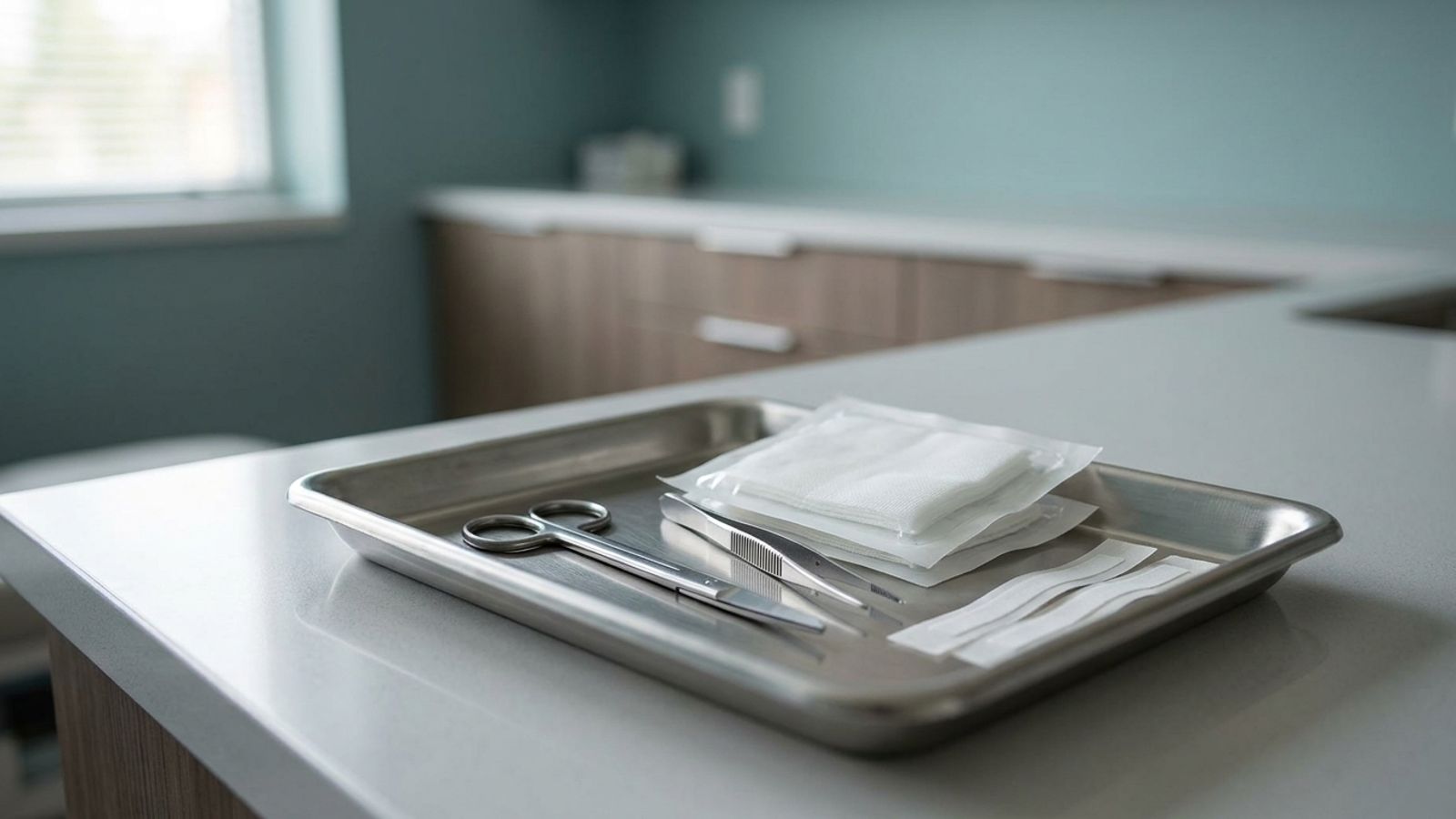
You can get stitches or staples removed at AfterOurs even if another clinic, an ER or a surgeon put them in. Suture removal is a short visit: a clinician checks that the wound has healed, takes the stitches or staples out, and dresses the area if needed. Walk in, or book a time that fits around work.
Here's when stitches usually come out, what to bring, and why it's worth not doing it yourself.
When should stitches come out?
Always go by the date the clinician who treated your wound gave you. As a general guide, stitches on the face come out soonest, often within about a week, while those on the scalp, arms, legs and back stay in longer. Stitches over a joint such as a knee or knuckle, or on the hands and feet, often need the longest, because those areas move and stretch. Staples are commonly removed in a similar time frame to stitches in the same area.
Out too early, a wound can pull open. Left in too long, stitches can leave more marks and be harder to remove. If you've lost track of the date, come in and a clinician can look at how the wound is healing.
Dissolvable stitches are different. They're designed to break down on their own and usually don't need removing. If you're not sure which kind you have, check your discharge paperwork or ask us to take a look.
Can I remove my own stitches?
It's tempting, but we don't recommend it. Household scissors and tweezers aren't sterile, it's easy to cut skin or leave a piece of thread behind, and you can't easily judge whether the wound is ready. Staples need a special tool. A clinic visit also means someone checks for infection or a wound that isn't closing well before the stitches come out.
What happens at a suture removal visit?
The clinician cleans the area and looks at how the wound has closed. If it's ready, each stitch is snipped and gently pulled out, or each staple is lifted out with a staple remover. Most people feel a light tug rather than pain. Thin adhesive strips may go on afterwards to support the skin for a few more days.
If the wound isn't ready, or looks infected, the clinician will tell you and explain the next step, which might be leaving some stitches in a little longer or treating an infection.
Stitches from surgery, or from out of town?
We remove stitches and staples placed at ERs, other urgent cares and clinics elsewhere, including out of state. If yours are from surgery, check your discharge instructions first: some surgeons want to see the incision themselves at a follow-up appointment, and it's worth honoring that. If the instructions say any clinic can remove them, or your surgeon's office is far away, we can take care of it.
What to bring
- The date the stitches or staples were placed
- Any discharge instructions you were given, especially the recommended removal date
- How many stitches or staples you were told you have, if you know
Signs your stitches need a look sooner
Don't wait for your removal date if you notice increasing redness, swelling, warmth or pain around the wound, pus or a bad smell, red streaks spreading from it, a fever, or edges of the wound pulling apart. Come in so a clinician can check it.
What does suture removal cost?
Removing stitches or staples that were placed somewhere else is a flat fee of $50 self-pay, the same whether you walk in or book ahead. If an AfterOurs clinician did your laceration repair, removal is free. Full pricing is on the cost and insurance page.
Caring for the skin afterwards
New skin is still fragile for a few weeks after stitches come out. Keep it clean, avoid activities that stretch it hard, and protect it from the sun, which can darken a healing scar. If you have another cut that might need stitches, our page on cuts and lacerations explains when to come in.
Call 911 or go to the ER if… a wound reopens and bleeds heavily without slowing under firm pressure; redness is spreading quickly with a high fever, chills or feeling very unwell; you notice new numbness, coldness or color change beyond the wound; or you feel confused, faint or short of breath.
Where to find us
Four clinics across metro Denver, all ages welcome, se habla español:
- Hampden (Southeast Denver): 8 AM–11 PM daily
- Littleton: 8 AM–11 PM daily
- Thornton: 8 AM–11 PM daily
- Highlands: Mon–Fri 5–11 PM, Sat–Sun 8 AM–11 PM
Walk in, or book online.
Medically reviewed by Peter Martinuzzi, MD
This article is general health information, not medical advice for your situation. If you are worried, come in or book a telehealth visit — and if it is an emergency, call 911.