
Sprain or Fracture? Broken Toes, Fingers and When You Need an X-Ray
How to tell a broken toe or finger from a sprain, what a broken pinky toe usually needs, and when an X-ray at urgent care makes sense.
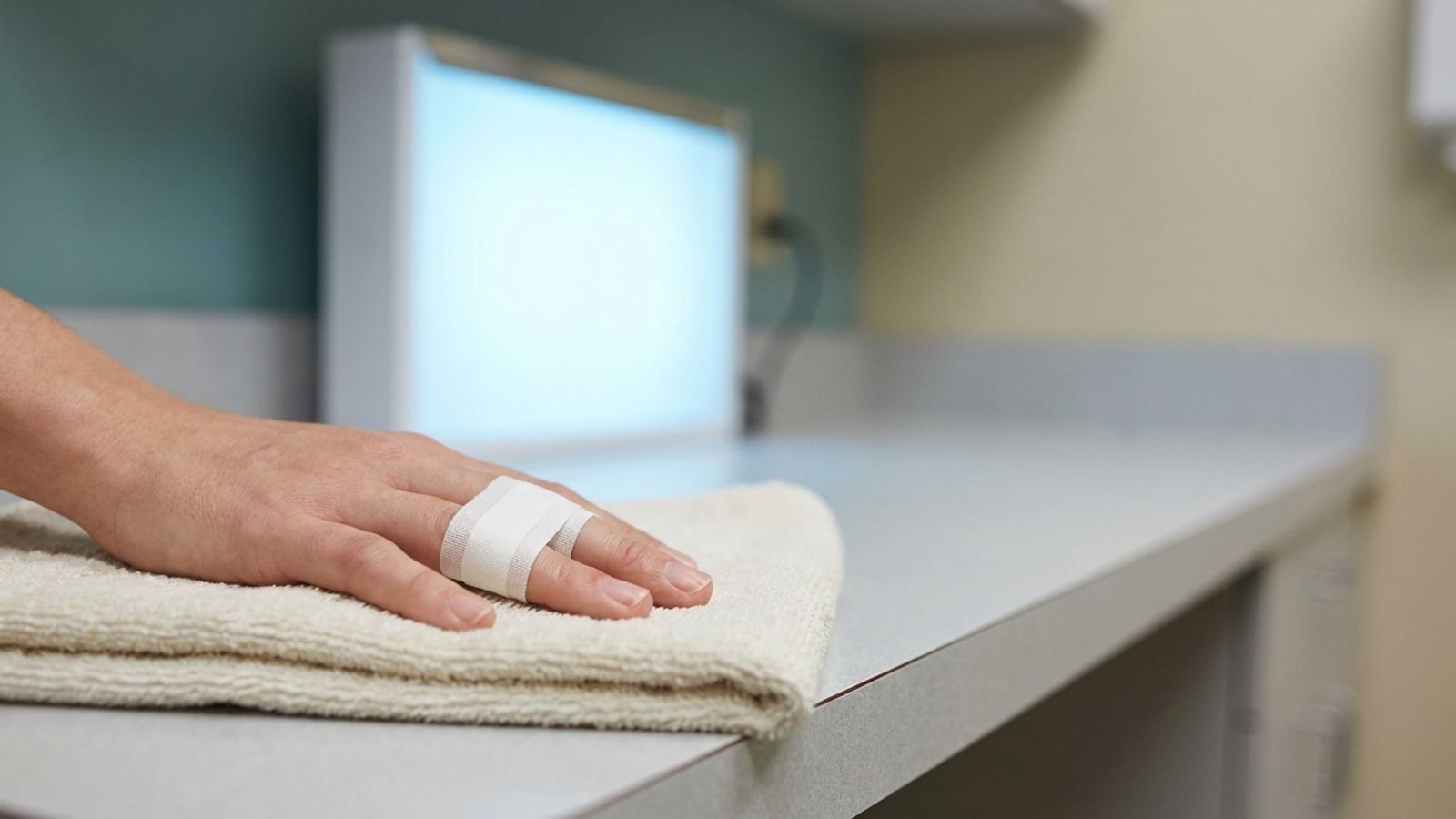
A broken toe or finger and a bad sprain can look alike: both swell, bruise and hurt to move. The usual clues to a break are pain right on the bone, a toe or finger that looks crooked, and trouble walking or gripping. An X-ray is the way to know for sure, and many toe and finger injuries can be examined, X-rayed and splinted at urgent care.
Is my toe broken or just stubbed?
A stubbed toe hurts a lot for a few minutes, then settles into a dull ache. A broken toe tends to keep hurting, and the pain is sharpest when you press on one spot of the bone. Other signs that point toward a break:
- Swelling and bruising that spread over the next day, sometimes onto neighboring toes
- A toe that points the wrong way or sits at an odd angle
- Pain that makes it hard to walk or to fit into a shoe
- Blood under the toenail, or a cut near the injured spot
Does a broken pinky toe need treatment?
The pinky toe is the one that catches the bed frame or the doorway, and it's one of the most commonly broken. Many simple breaks of the smaller toes are treated by taping the toe to its neighbor (buddy taping) and wearing a stiff-soled shoe while it heals. That doesn't mean every broken pinky toe can be handled at home. Have it checked if the toe looks crooked, if there's a cut or a torn nail over it, if the pain isn't easing after several days, or if you have diabetes or poor circulation in your feet.
The big toe is different. It carries much of your weight when you walk and push off, so an injured big toe is worth an exam even if it seems minor.
Broken finger or jammed finger?
A finger jammed by a ball or caught in a door often sprains the ligaments around a knuckle. A break looks similar, so watch for a few specific things:
- A finger that looks bent, shortened or rotated, or overlaps the next finger when you make a fist
- A fingertip that droops and won't straighten on its own (sometimes called mallet finger)
- A knuckle that won't bend or straighten fully, or swelling that keeps building
- A crush injury, or a cut over the injured joint
These matter because finger injuries that heal crooked or stiff can affect your grip for a long time. A splint in the right position early on is much easier than fixing it later.
Call 911 or go to the ER if… bone is visible through the skin; a large bone such as the thigh, hip or upper arm looks deformed; the finger, toe, hand or foot below the injury is numb, pale, blue or cold; a fingertip or part of a finger has been cut off; a wound won't stop bleeding with firm pressure; or the injury came with a head, neck or back injury.
When do you need an X-ray?
Not every stubbed toe or jammed finger needs imaging. A clinician decides based on the exam: pain pressed right on the bone, a visible deformity, trouble bearing weight, an injured big toe or thumb, a crush injury, or pain that isn't improving after a week are the kinds of findings that usually lead to an X-ray. The image shows whether the bone is broken, whether the pieces are lined up, and whether the break reaches into a joint, which changes how it's splinted and whether you need a specialist.
Do urgent cares have X-rays?
Many do, including ours. Our clinics have X-ray equipment, and an X-ray is ordered by your provider as part of a visit, then reviewed with you during that same visit. X-ray staffing varies, though, so we can't promise one at any particular hour. If you think you'll need an X-ray, call the clinic before you come in, or ask at the front desk when you arrive.
For minor fractures and dislocations of the fingers and toes, care at a minor injury visit can include splinting or buddy-taping, putting a simple finger or toe dislocation back in place, a pain-control plan, a work or school note, and orthopedic follow-up when the break needs it.
What to do before you're seen
- Take off rings right away if a finger is hurt; swelling can make them impossible to remove later.
- Ice for about 20 minutes at a time with a cloth between the ice and your skin, and keep the hand or foot raised.
- Don't try to pull a crooked finger or toe straight yourself.
- Wear a roomy, stiff-soled shoe for a toe injury rather than going barefoot.
What does an X-ray visit cost?
Self-pay in-clinic visits are $175 for a standard visit, $250 with one moderate service such as an X-ray, and $330 for a procedure or two moderate services, such as two X-rays. The tier depends on the care you actually receive. If you're using insurance: we contract with all major commercial and government plans, including Colorado Medicaid and Medicare. We can't guarantee a particular commercial plan has us in network, and if you turn out to be out of network or your benefits are denied, we bill you at the self-pay rates. See our cost and insurance page for details.
Where to find us
Four clinics across metro Denver, all ages welcome, se habla español:
- Hampden (Southeast Denver): 8 AM–11 PM daily
- Littleton: 8 AM–11 PM daily
- Thornton: 8 AM–11 PM daily
- Highlands: Mon–Fri 5–11 PM, Sat–Sun 8 AM–11 PM
Walk in, or book online.
Medically reviewed by Peter Martinuzzi, MD
This article is general health information, not medical advice for your situation. If you are worried, come in or book a telehealth visit — and if it is an emergency, call 911.