
Bronchiolitis and RSV in Babies: Symptoms, Home Care, and Breathing Signs to Watch
Bronchiolitis is a common chest infection in babies, usually from RSV. Here's how it progresses, how to help at home, and the breathing signs that mean get help.
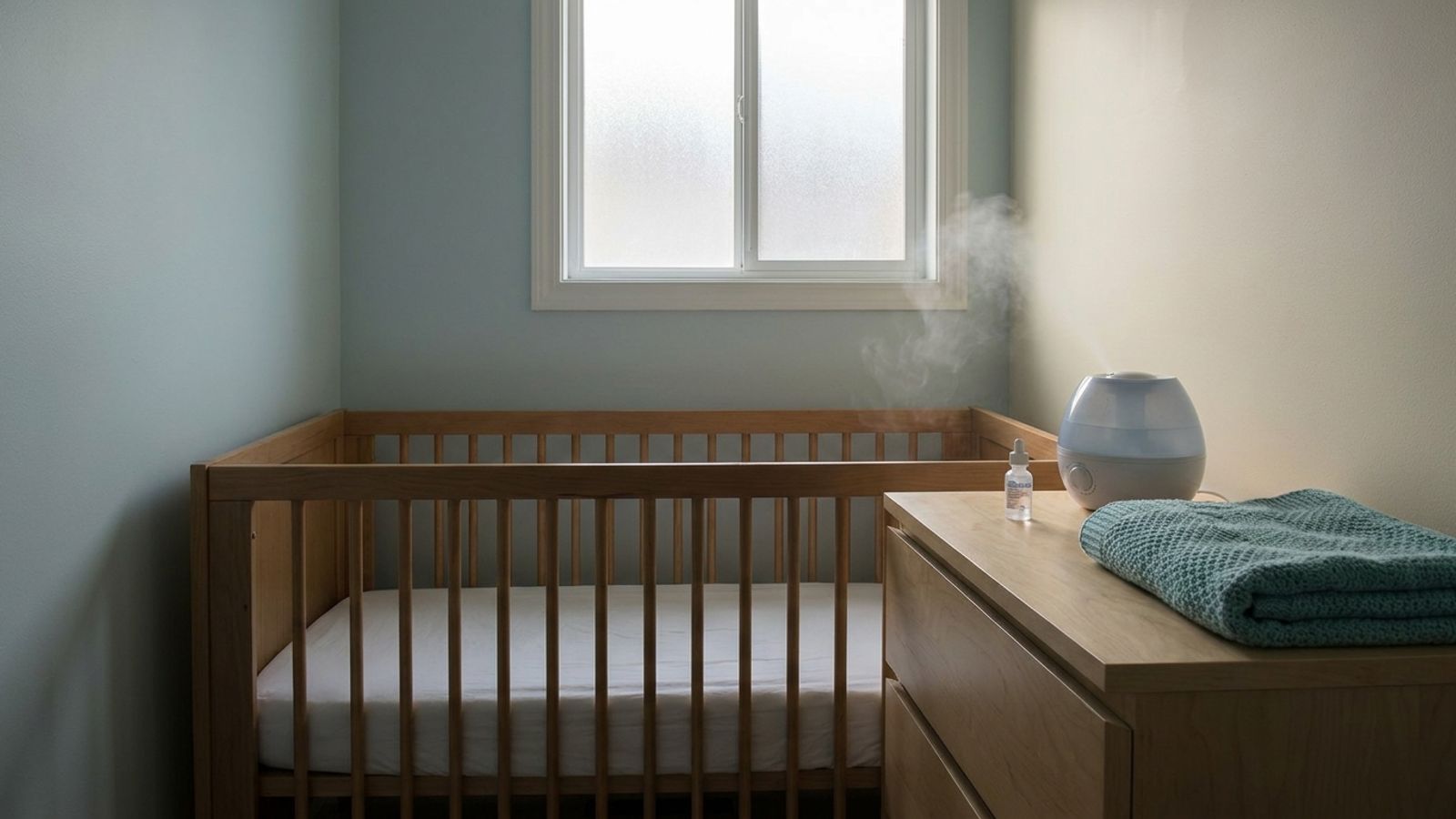
Bronchiolitis is an infection of the small airways in the lungs, most common in babies and children under 2, and usually caused by RSV. It starts like a cold, with a runny nose and mild fever, then over two to three days turns into a cough, wheezing and faster breathing. Most babies get better at home in one to two weeks, though the cough can last longer. Watch the breathing closely: fast or labored breathing, pauses in breathing, or trouble feeding need to be seen right away.
How bronchiolitis progresses
- Days 1 to 2: runny or stuffy nose, mild cough, sometimes a low fever
- Days 3 to 5: usually the worst: cough, wheezing, faster breathing, and trouble feeding
- Then: slow improvement over one to two weeks; the cough may last up to four weeks
RSV season in Colorado usually runs from fall through spring, peaking in winter.
Who's most at risk
- Babies under 6 months, especially under 3 months
- Babies born early
- Babies with heart or lung conditions
- Babies with a weakened immune system
Home care
- Clear the nose: saline drops and gentle suction before feeds and sleep make breathing and feeding easier
- Offer smaller, more frequent feeds, breast milk or formula
- Keep the air moist with a cool-mist humidifier, especially in Denver's dry winter air
- Treat fever with acetaminophen, dosed by weight; ibuprofen only for babies 6 months and older
- Keep them upright when awake and fussy, but always put them to sleep on their back
- Keep away from smoke
Antibiotics don't help bronchiolitis, because it's a virus. Cough and cold medicines aren't safe for young children.
Watch the breathing
Count breaths for a full minute while your baby is calm. Get seen if a baby under 1 year is breathing more than about 50 to 60 times a minute, or a toddler more than about 40. Also look for:
- Skin pulling in between the ribs, under the ribcage or at the neck with each breath
- Flaring nostrils
- Grunting or head bobbing with each breath
- Too tired or breathless to feed
Protecting babies from RSV
- Ask your pediatrician about RSV protection for your baby; there are options for newborns and for pregnant people late in pregnancy
- Wash hands before holding a baby, and keep sick people away from newborns
- Avoid crowds with young babies during RSV season
When to get seen
Come in the same day if your baby is breathing faster than usual, feeding less than half as much as usual, has fewer wet diapers, has a fever and is under 3 months, or you're worried. A clinician can listen to the lungs, check oxygen levels, test for RSV, flu and COVID, and help decide whether your baby can be cared for at home. Our posts on flu, COVID or RSV, croup and taking your child to urgent care have more for parents.
At an AfterOurs clinic, a standard self-pay visit is $175, a visit with a rapid test is $250, and a self-pay in-clinic visit never costs more than $330. We contract with all major commercial and government plans, including Colorado Medicaid and Medicare. See the cost and insurance page.
Call 911 or go to the ER if your baby has pauses in breathing, lips, tongue or skin turning blue or gray, is struggling to breathe with skin pulling in at the ribs or neck, is too breathless to feed or drink, is very sleepy or hard to wake, has no wet diaper in 8 hours, or is under 3 months with a fever of 100.4°F or higher.
Where to find us
Four clinics across metro Denver, all ages welcome, se habla español:
- Hampden (Southeast Denver): 8 AM–11 PM daily
- Littleton: 8 AM–11 PM daily
- Thornton: 8 AM–11 PM daily
- Highlands: Mon–Fri 5–11 PM, Sat–Sun 8 AM–11 PM
Walk in, or book online.
Medically reviewed by Peter Martinuzzi, MD
This article is general health information, not medical advice for your situation. If you are worried, come in or book a telehealth visit — and if it is an emergency, call 911.