
Cellulitis, Abscess or Boil: When a Skin Infection Needs a Visit
How to tell cellulitis from an abscess or a boil, what's safe to do at home, and when a red, painful patch of skin needs a same-day visit.
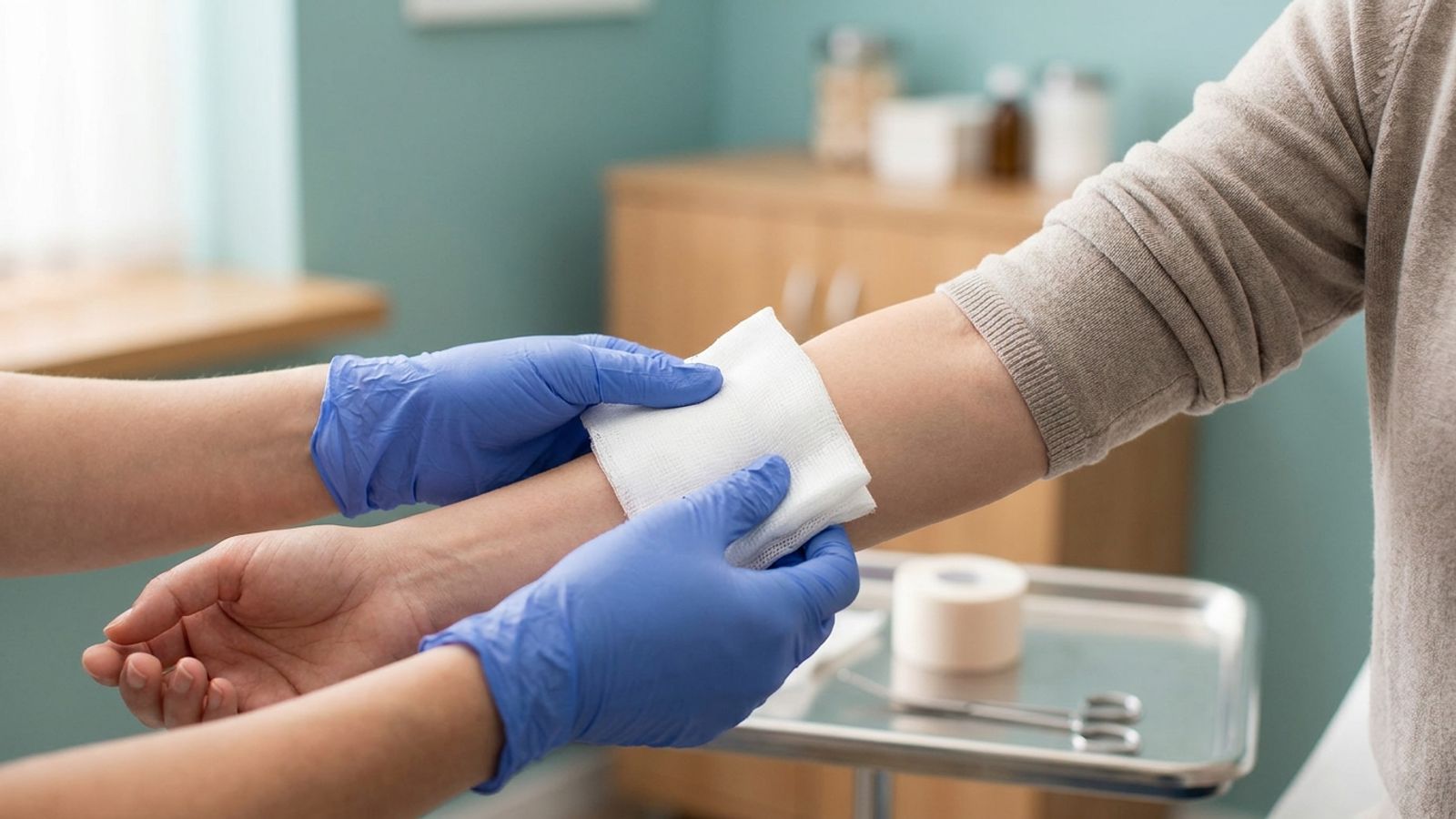
Cellulitis is a bacterial infection that spreads through the skin as a warm, red, tender patch. An abscess is a pocket of pus under the skin, and a boil is a small abscess that starts in a hair follicle. Small boils often drain and heal on their own, but cellulitis usually needs prescription treatment, and a larger abscess usually needs to be drained by a clinician, so either is worth a same-day visit.
What does cellulitis look like?
Cellulitis is flat or slightly swollen rather than a lump. The skin is red or darker than usual (on brown and Black skin it may look purple, brown or gray rather than red), warm to the touch, tender, and often tight or shiny. The edges can be hard to define, and the area tends to grow over hours to days. It most often shows up on the lower legs, but it can happen anywhere bacteria get in: a scrape, a bug bite, cracked skin between the toes, or a patch of eczema.
A useful trick: draw around the edge of the redness with a pen. If it spreads past the line over the next several hours, that's a sign the infection is growing and needs to be seen.
Abscess or boil: what's the difference?
Both are collections of pus. A boil starts in a single hair follicle and is often pea- to marble-sized, with a white or yellow head. A cluster of connected boils is called a carbuncle. An abscess is a larger pocket that can form anywhere, often under the arm, in the groin, on the buttocks or around a wound. Typical signs:
- A painful, swollen lump that may feel soft or squishy in the middle
- Redness and warmth around it
- Pus or drainage, or a point that looks ready to open
- Sometimes fever or feeling generally unwell
Many of these are caused by staph bacteria, including MRSA, a type of staph that some common antibiotics don't work on. You can't tell MRSA by looking, which is one reason a clinician may take a sample to test.
What can I do at home for a boil?
For a small boil with no fever and no spreading redness:
- Hold a warm, damp washcloth on it for 10 to 15 minutes a few times a day. Warmth can help it come to a head and drain on its own.
- Don't squeeze it or cut it open yourself. That can push the infection deeper and spread it.
- If it drains, cover it with a clean bandage, wash your hands, and don't share towels or razors.
When does a skin infection need a visit?
Come in the same day if:
- Redness is spreading, or the area is warm, swollen and getting more painful
- A lump is larger than about half an inch, very painful, or not draining after a few days of warm compresses
- You have a fever, or you feel run down along with the skin problem
- Boils keep coming back, or other people in your home are getting them
- You have diabetes, a weakened immune system, or poor circulation, where skin infections can move faster
Call 911 or go to the ER if… red streaks are spreading from the area toward your body, or redness is expanding quickly; you have a high fever with shaking chills, confusion, or a racing heartbeat; the infection is on your face near the eye, or over a joint; the pain is severe and seems far worse than the skin looks; or the skin is turning dark, blistering or going numb.
What happens at an urgent care visit?
A clinician examines the area to tell whether it's cellulitis, an abscess, or both, since an abscess often has some cellulitis around it. For an abscess, boil or skin infection, care at AfterOurs can include:
- Incision and drainage: the skin is numbed with a local anesthetic, a small opening lets the pus out, and the pocket may be packed with gauze
- Antibiotics for cellulitis, when the clinician decides they're needed
- A culture when MRSA is a concern
- Wound-care instructions and a follow-up plan, including a recheck if the area was packed
After treatment, keep watching the area. Call or come back if redness spreads, the fever returns, or it isn't improving over the next couple of days.
What does it cost?
Self-pay in-clinic visits are $175 for a standard visit, $250 with one moderate service, and $330 for a procedure or two moderate services; incision and drainage counts as a procedure. The tier depends on the care you actually receive. If you're using insurance: we contract with all major commercial and government plans, including Colorado Medicaid and Medicare. We can't guarantee a particular commercial plan has us in network, and if you turn out to be out of network or your benefits are denied, we bill you at the self-pay rates. See our cost and insurance page for details.
Where to find us
Four clinics across metro Denver, all ages welcome, se habla español:
- Hampden (Southeast Denver): 8 AM–11 PM daily
- Littleton: 8 AM–11 PM daily
- Thornton: 8 AM–11 PM daily
- Highlands: Mon–Fri 5–11 PM, Sat–Sun 8 AM–11 PM
Walk in, or book online.
Medically reviewed by Peter Martinuzzi, MD
This article is general health information, not medical advice for your situation. If you are worried, come in or book a telehealth visit — and if it is an emergency, call 911.