
Lower Back Pain and Pinched Nerves: What Helps, and When to Get Seen
Most lower back pain, even when it's bad, eases within a few weeks. Here's what helps, what a pinched nerve feels like, and the signs that mean you shouldn't wait.
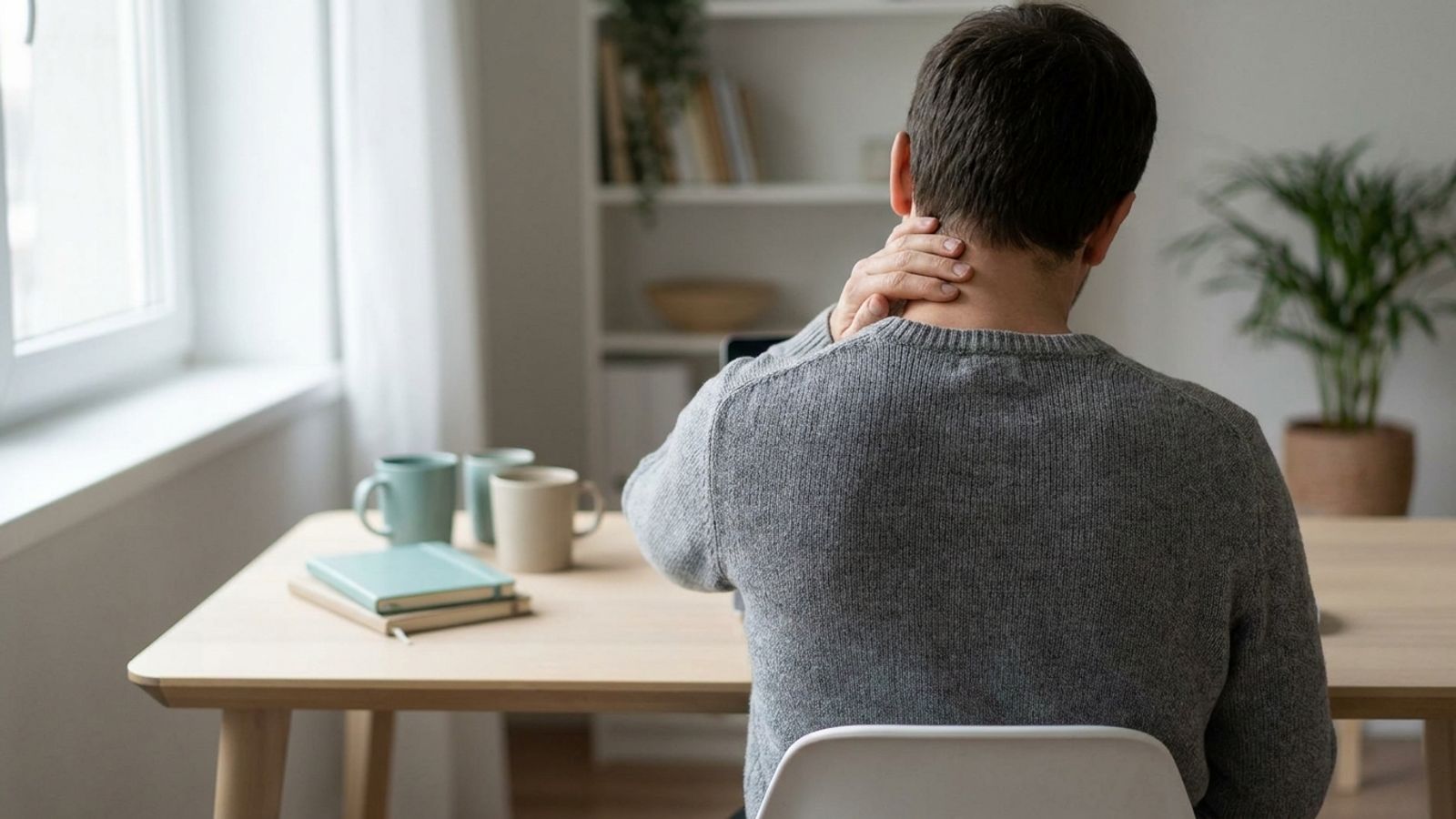
Most sudden lower back pain comes from a strained muscle or ligament, often after lifting, twisting or a long day of yard work, and it usually improves within a few days to a few weeks. A pinched nerve feels different: pain, tingling or numbness that shoots down a leg or arm. Staying gently active helps more than bed rest. Get seen if pain is severe, follows a fall or injury, or comes with numbness, weakness or fever.
Common causes
- Muscle or ligament strain, from lifting, twisting, a sudden movement or overuse
- A pinched nerve, when a bulging disc or bone spur presses on a nerve root in the spine
- Sciatica, a pinched nerve low in the back that sends pain down the buttock and leg
- Poor posture and long hours sitting
- Arthritis in the spine, more common with age
What a pinched nerve feels like
- Sharp, burning or electric pain that travels down an arm or leg
- Tingling, pins and needles or numbness in the hand or foot
- Weakness in the arm or leg
- Pain that's worse with coughing, sneezing or certain positions
A pinched nerve in the neck usually sends symptoms into the shoulder, arm and hand. One in the lower back sends them into the buttock and leg.
Back pain relief in the first few days
- Keep moving gently. Short walks are better than staying in bed.
- Use ice for the first day or two, then heat if it feels better
- Try acetaminophen or ibuprofen if they're safe for you
- Avoid heavy lifting and the movement that set it off
- Sleep on your side with a pillow between your knees, or on your back with one under your knees
What urgent care can do
A clinician examines your back, checks strength, reflexes and sensation, and looks for signs of anything more serious. Treatment may include prescription medicine for pain or muscle spasm, a plan for activity, and a referral to physical therapy. Most back pain doesn't need an X-ray or MRI, but if you've had a fall or an injury, imaging may be part of the visit.
When to get seen
Come in if pain is severe, hasn't started to improve after a few days, followed a fall or injury, or comes with numbness, tingling or weakness, and if you're over 50 or have a history of cancer. At an AfterOurs clinic, a standard self-pay visit is $175, and a self-pay in-clinic visit never costs more than $330. We contract with all major commercial and government plans, including Colorado Medicaid and Medicare. See our back and neck pain page and the cost and insurance page. For a work injury, see our post on what to do in the first 24 hours.
Go to the ER or call 911 if you have new trouble controlling your bladder or bowels, numbness in the groin or inner thighs, weakness in both legs or weakness that's getting worse, back pain with a fever, back pain after a serious fall or car crash, or sudden severe back or belly pain, especially if you're older or have high blood pressure.
Where to find us
Four clinics across metro Denver, all ages welcome, se habla español:
- Hampden (Southeast Denver): 8 AM–11 PM daily
- Littleton: 8 AM–11 PM daily
- Thornton: 8 AM–11 PM daily
- Highlands: Mon–Fri 5–11 PM, Sat–Sun 8 AM–11 PM
Walk in, or book online.
Medically reviewed by Peter Martinuzzi, MD
This article is general health information, not medical advice for your situation. If you are worried, come in or book a telehealth visit — and if it is an emergency, call 911.