
Nosebleeds in Denver's Dry Air: How to Stop One, Prevent the Next, and When to Get Seen
Dry winter air at altitude makes nosebleeds common in Denver. Here's the right way to stop one, how to prevent them, and when a nosebleed needs to be seen.
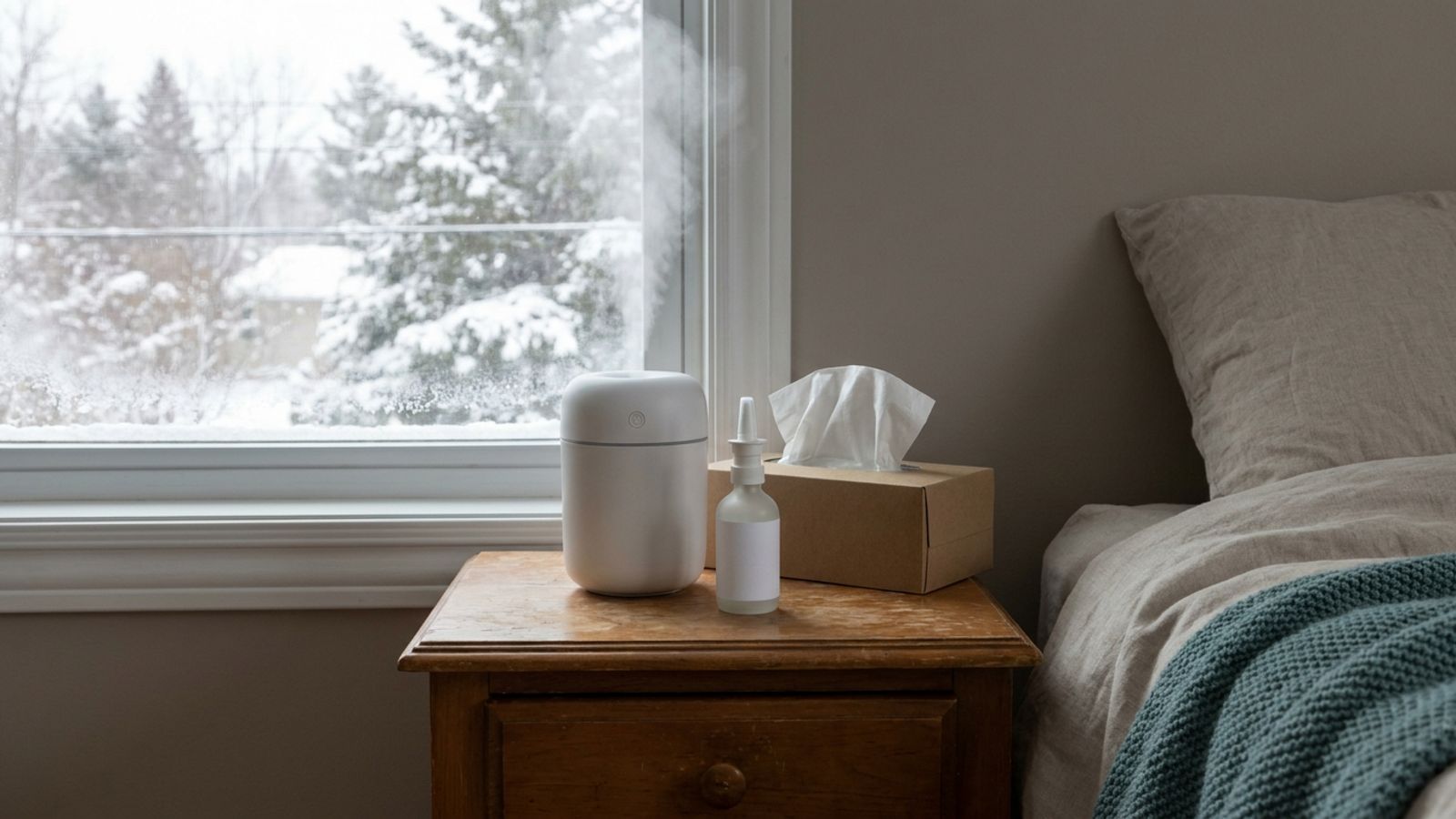
Most nosebleeds come from small blood vessels at the front of the nose, and in Denver they're especially common in winter, when dry, high-altitude air and indoor heat dry out the lining of the nose. To stop one, sit up, lean forward and pinch the soft part of your nose firmly for 10 to 15 minutes without letting go. A nosebleed that won't stop after 20 minutes of pressure, follows a hard hit to the face, or is very heavy needs care.
Why nosebleeds are so common here
- Dry air: Denver's low humidity, plus indoor heating, dries and cracks the inside of the nose
- Altitude: visitors and new residents are especially prone in their first weeks
- Colds and allergies: blowing your nose often irritates it
- Nose picking and rubbing, especially in children
- Medicines: blood thinners, aspirin and some nasal sprays
- Injury to the nose
How to stop a nosebleed
- Sit up and lean forward, so blood drains out of the nose instead of down your throat
- Pinch the soft part of the nose, just below the bony bridge, firmly with your thumb and finger
- Hold it for 10 to 15 minutes by the clock. Don't let go to check.
- Breathe through your mouth, and spit out any blood rather than swallowing it
- A cold pack on the bridge of the nose may help
Don't tilt your head back, lie down, or pack the nose with tissue. If it starts again, repeat the steps. A spray of an over-the-counter decongestant nasal spray before pinching can help, if it's safe for you.
After it stops
- Don't blow or pick your nose for a day or so
- Avoid heavy lifting, bending over and hot drinks for a few hours
- Put a thin layer of petroleum jelly or saline gel just inside the nostrils
Preventing nosebleeds
- Run a humidifier in the bedroom, especially in winter
- Use a saline nasal spray or gel a few times a day
- Put a little petroleum jelly inside the nostrils at bedtime
- Keep children's fingernails short
- Drink plenty of water, especially when you first arrive at altitude. Our post on altitude sickness has more for visitors.
When to get seen
Come in if nosebleeds keep coming back, if you take a blood thinner and bleed often, if a child has frequent nosebleeds, or if you also have unusual bruising or bleeding gums. A clinician can look for the source, and may seal a bleeding blood vessel or place packing. High blood pressure can make nosebleeds harder to stop, so it's worth having your blood pressure checked too; see our post on what's normal.
At an AfterOurs clinic, a standard self-pay visit is $175, and a self-pay in-clinic visit never costs more than $330. We contract with all major commercial and government plans, including Colorado Medicaid and Medicare. See our nosebleeds page and the cost and insurance page.
Go to the ER or call 911 if bleeding hasn't stopped after 20 minutes of firm pressure, the bleeding is heavy or you're swallowing a lot of blood, you feel dizzy, weak or faint, the nosebleed followed a head injury or a hard hit to the face, or you have trouble breathing.
Where to find us
Four clinics across metro Denver, all ages welcome, se habla español:
- Hampden (Southeast Denver): 8 AM–11 PM daily
- Littleton: 8 AM–11 PM daily
- Thornton: 8 AM–11 PM daily
- Highlands: Mon–Fri 5–11 PM, Sat–Sun 8 AM–11 PM
Walk in, or book online.
Medically reviewed by Peter Martinuzzi, MD
This article is general health information, not medical advice for your situation. If you are worried, come in or book a telehealth visit — and if it is an emergency, call 911.