
Splinter Removal: How to Get One Out, and When to Let a Clinician Do It
Most splinters come out easily at home with clean tweezers. Here's how to do it, and when a splinter that's deep, under a nail, or infected needs a clinician.
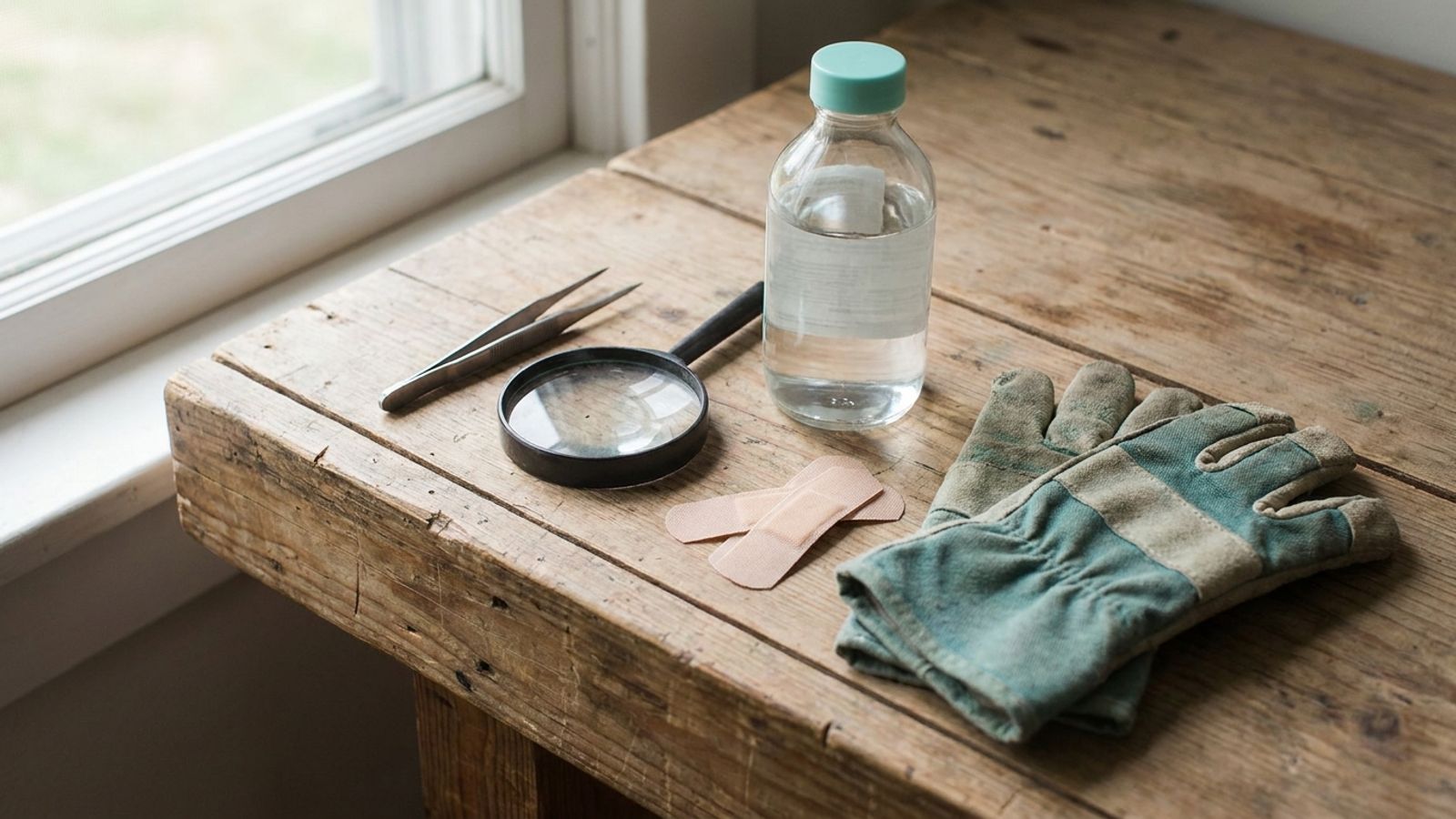
Most splinters are small and near the surface, and can be removed at home with clean tweezers after washing the area. A splinter that's deep, large, under a fingernail or toenail, near the eye, made of glass or metal, or that you can't get out should be removed by a clinician. So should one that's become red, swollen and painful. Any splinter can carry tetanus, so check whether your shot is up to date.
Removing a splinter at home
- Wash your hands and the area with soap and water
- Clean tweezers and a needle with rubbing alcohol
- Use good light and a magnifying glass if you have one
- Pull it out at the same angle it went in, gripping the end firmly
- If it's under the skin, gently lift the skin over the end with the needle, then grab it with tweezers
- Wash again, apply petroleum jelly or antibiotic ointment, and cover with a bandage
Soaking the area in warm water for a few minutes first can soften the skin. For tiny, shallow splinters, a piece of tape pressed on and pulled off can sometimes lift them out.
What not to do
- Don't squeeze, which can break the splinter and push pieces deeper
- Don't dig deeply with a needle or cut the skin
- Don't leave a large or deep splinter in, hoping it will work its way out
Splinters a clinician should remove
- Deep, large, or broken off below the skin
- Under a fingernail or toenail
- Glass, metal or thorns, which can break and are harder to see
- Near the eye or on the face
- On a joint, or where it's painful to move
- In a young child who won't hold still
A clinician can numb the area, remove the splinter, and, for glass or metal, may use an X-ray to look for pieces left behind.
Signs of infection
- Increasing redness, warmth or swelling after a day or two
- Pus or drainage
- A red streak spreading from the area
- Fever
Tetanus
If your last tetanus shot was more than 5 years ago and the splinter was dirty or deep, or more than 10 years ago for a clean one, you may need a booster. Our tetanus shot post explains when.
When to get seen
Come in for a splinter you can't remove, a deep, glass, metal or under-the-nail splinter, signs of infection, or a tetanus shot. At an AfterOurs clinic, a standard self-pay visit is $175, and a self-pay in-clinic visit never costs more than $330. We contract with all major commercial and government plans, including Colorado Medicaid and Medicare. See our splinters page and the cost and insurance page.
Go to the ER if something is stuck in or near the eye, a large object is embedded in the skin (leave it in place), there's heavy bleeding, or a red, swollen area is spreading quickly with a fever or chills.
Where to find us
Four clinics across metro Denver, all ages welcome, se habla español:
- Hampden (Southeast Denver): 8 AM–11 PM daily
- Littleton: 8 AM–11 PM daily
- Thornton: 8 AM–11 PM daily
- Highlands: Mon–Fri 5–11 PM, Sat–Sun 8 AM–11 PM
Walk in, or book online.
Medically reviewed by Peter Martinuzzi, MD
This article is general health information, not medical advice for your situation. If you are worried, come in or book a telehealth visit — and if it is an emergency, call 911.