
Burns: First Aid, First vs. Second Degree, and When a Burn Needs to Be Seen
Most burns at home are minor and heal with good first aid. Here's how to cool a burn, care for a blister, tell how deep it is, and know when it needs to be seen.
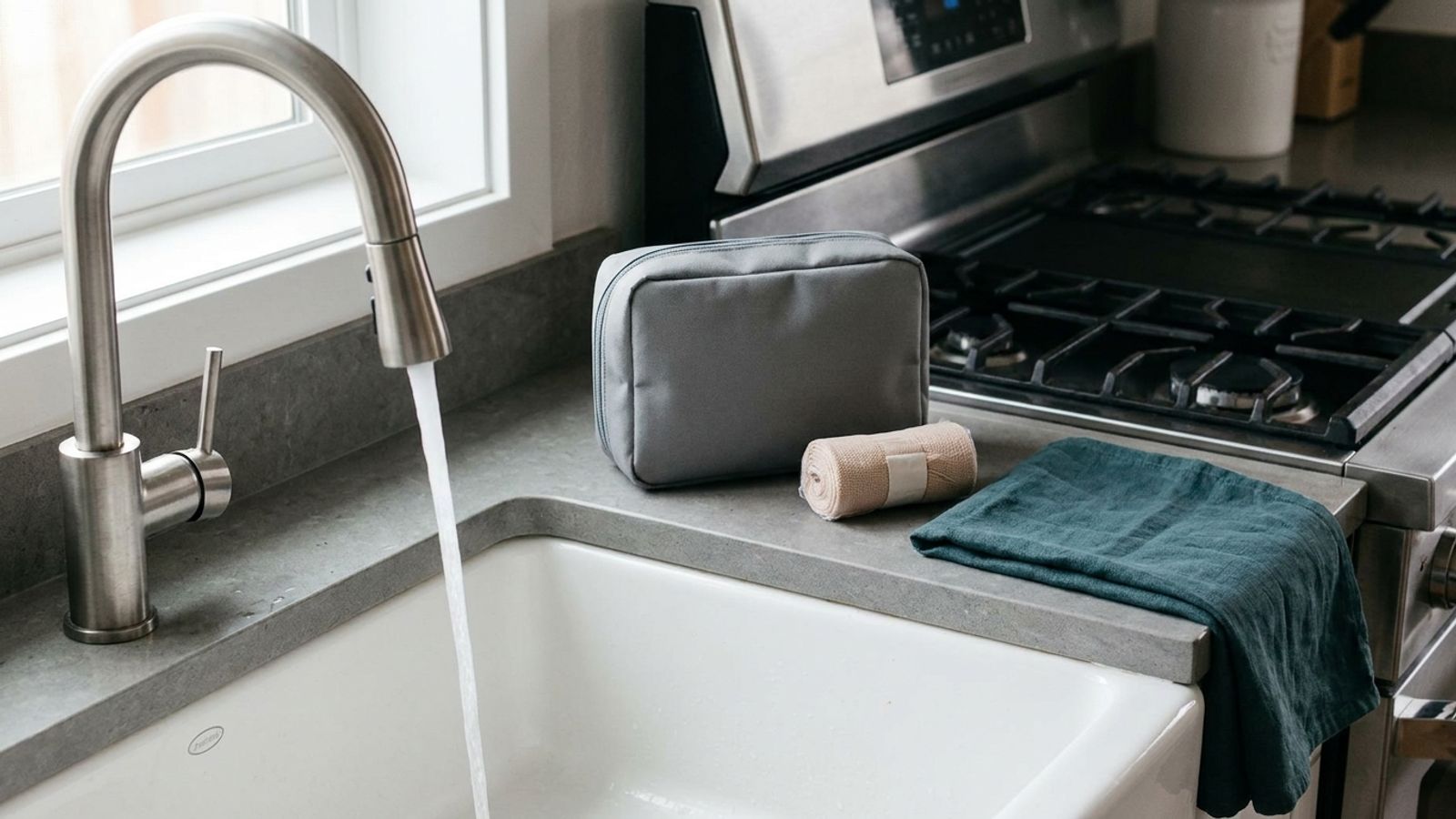
For a minor burn, cool it right away under cool (not ice-cold) running water for 10 to 20 minutes, remove rings or tight items nearby, then cover it loosely with a clean, non-stick dressing. First-degree burns are red and painful, like a mild sunburn. Second-degree burns blister. Third-degree burns look white, brown or leathery and may not hurt. A blistering burn larger than about 3 inches, or any burn on the face, hands, feet, genitals or a major joint, should be seen. Deep, large, electrical or chemical burns need the ER.
How deep is the burn?
- First degree: red, dry, painful skin, no blisters. Heals in about a week.
- Second degree: red, very painful, with blisters or a wet, shiny look. Heals in two to three weeks, sometimes with scarring.
- Third degree: white, brown, black or leathery skin, which may feel numb because nerves are damaged. Needs emergency care.
First aid
- Cool it: run cool tap water over the burn for 10 to 20 minutes, as soon as you can
- Take off jewelry, watches and tight clothing near the burn before it swells
- Cover it loosely with a clean, non-stick bandage or plastic wrap
- Relieve pain with ibuprofen or acetaminophen, if they're safe for you
- Keep it clean and apply plain petroleum jelly or an antibiotic ointment as it heals
What not to do
- Don't use ice, which can damage skin further
- Don't put butter, oil, toothpaste or egg on a burn
- Don't pop blisters. If one breaks, gently clean it and cover it.
- Don't pull off clothing stuck to the burn
Caring for a blister
Leave it intact; it protects the skin underneath. If it breaks, wash gently with soap and water, apply ointment, and cover it with a non-stick dressing, changing it daily.
Tetanus
Burns can let tetanus bacteria in. If your last tetanus shot was more than 5 to 10 years ago, you may need a booster. Our tetanus shot post explains when.
When to get seen
Come in for a blistering burn larger than about 3 inches, a burn on the face, hands, feet, genitals or over a joint, a burn in a young child or older adult, a burn that isn't healing, or signs of infection like increasing redness, swelling, pus or fever. A clinician can clean and dress the burn, prescribe a burn cream, and update your tetanus shot. At an AfterOurs clinic, a standard self-pay visit is $175, and a self-pay in-clinic visit never costs more than $330. We contract with all major commercial and government plans, including Colorado Medicaid and Medicare. See our minor burns page and the cost and insurance page. For sunburn, see our post on sun poisoning at altitude.
Call 911 or go to the ER for third-degree burns, large or deep burns, burns that go all the way around a limb, burns to the airway or from breathing in smoke or hot air, electrical burns (even if they look small), chemical burns (rinse with lots of water first), or a burn with trouble breathing, confusion or signs of shock.
Where to find us
Four clinics across metro Denver, all ages welcome, se habla español:
- Hampden (Southeast Denver): 8 AM–11 PM daily
- Littleton: 8 AM–11 PM daily
- Thornton: 8 AM–11 PM daily
- Highlands: Mon–Fri 5–11 PM, Sat–Sun 8 AM–11 PM
Walk in, or book online.
Medically reviewed by Peter Martinuzzi, MD
This article is general health information, not medical advice for your situation. If you are worried, come in or book a telehealth visit — and if it is an emergency, call 911.