
Shoulder Pain: Rotator Cuff, Frozen Shoulder, Dislocation, and When to Get Seen
Most shoulder pain comes from the rotator cuff, and some from a frozen shoulder or an injury. Here's how they differ, what helps, and when shoulder pain is an emergency.
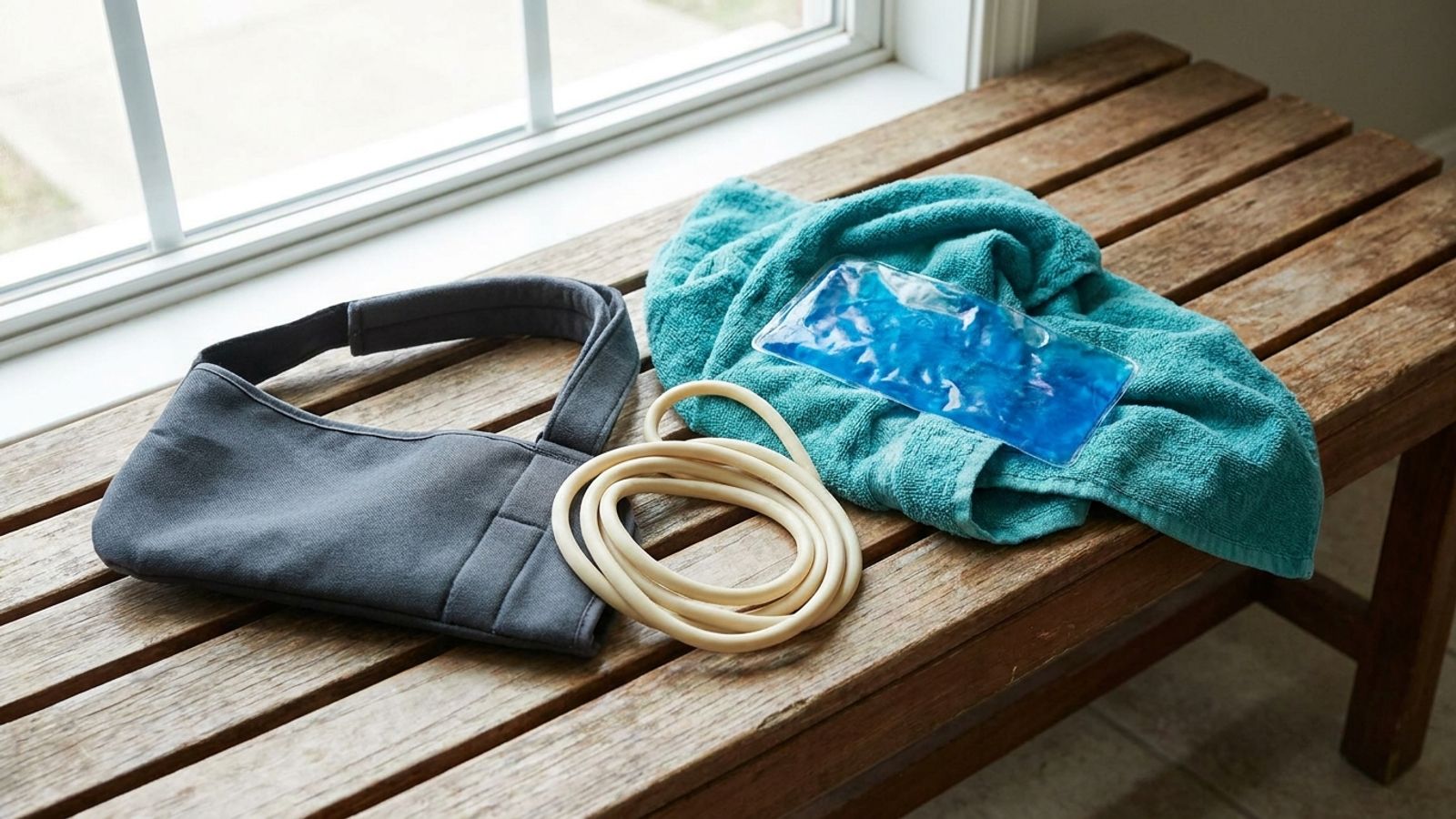
Most shoulder pain comes from the rotator cuff, the group of muscles and tendons that hold the shoulder joint in place: irritation (tendinitis), bursitis, or a tear, causing pain when you reach overhead or sleep on that side. A frozen shoulder causes slowly worsening stiffness and pain over months. A fall can dislocate or break the shoulder. Most overuse pain improves with rest, ice and gentle movement. Left shoulder or arm pain with chest pressure, shortness of breath or sweating can be a heart attack: call 911.
Rotator cuff tendinitis and bursitis
- Aching on the outside of the upper arm or shoulder
- Pain when reaching overhead, behind your back, or lifting
- Pain at night, especially lying on that side
- Common with painting, throwing, swimming, lifting and overhead work
Our post on bursitis vs. tendonitis covers these in more detail.
Rotator cuff tear
- Weakness lifting the arm, as well as pain
- Can follow a fall or heavy lift, or develop slowly with age
- A popping or cracking feeling
Frozen shoulder
- Gradual stiffness and pain over weeks to months, with less and less movement in every direction
- More common between 40 and 60, in women, with diabetes or thyroid problems, and after a period of not using the arm
- Slowly improves over one to three years, faster with physical therapy
Dislocation and fractures
A fall onto an outstretched arm or the shoulder itself, a hard hit in sports, or a ski or bike crash can dislocate the shoulder or break the collarbone or upper arm. A dislocated shoulder looks out of place or squared off, is very painful, and can't be moved. Don't try to pop it back in yourself.
What helps overuse pain
- Rest from the movement that hurts, without keeping the arm completely still
- Ice for 15 to 20 minutes a few times a day
- Anti-inflammatory pain relievers, if they're safe for you
- Gentle pendulum swings and range-of-motion exercises once the pain eases
- Physical therapy for pain lasting more than a few weeks
When shoulder pain could be your heart
Pain in the left shoulder, arm, jaw or back can come from the heart, especially with chest pressure, shortness of breath, sweating or nausea, or if it comes on with exertion. Our post on heart attack symptoms covers the signs.
What urgent care can do
A clinician can examine the shoulder, check strength and range of motion, and decide whether you need an X-ray. Treatment can include a sling, prescription anti-inflammatory medicine, and a referral to physical therapy or an orthopedic specialist.
At an AfterOurs clinic, a standard self-pay visit is $175, a visit with one moderate service such as an X-ray is $250, and a self-pay in-clinic visit never costs more than $330. We contract with all major commercial and government plans, including Colorado Medicaid and Medicare. See our bursitis and tendonitis page and the cost and insurance page.
Call 911 if shoulder or arm pain comes with chest pressure, shortness of breath, sweating, nausea or pain in the jaw. Go to the ER if the shoulder looks deformed or out of place, you can't move the arm at all after an injury, the arm or hand is numb, cold or pale, or a hot, swollen shoulder comes with a fever.
Where to find us
Four clinics across metro Denver, all ages welcome, se habla español:
- Hampden (Southeast Denver): 8 AM–11 PM daily
- Littleton: 8 AM–11 PM daily
- Thornton: 8 AM–11 PM daily
- Highlands: Mon–Fri 5–11 PM, Sat–Sun 8 AM–11 PM
Walk in, or book online.
Medically reviewed by Peter Martinuzzi, MD
This article is general health information, not medical advice for your situation. If you are worried, come in or book a telehealth visit — and if it is an emergency, call 911.